Genoa’s New Breakwater
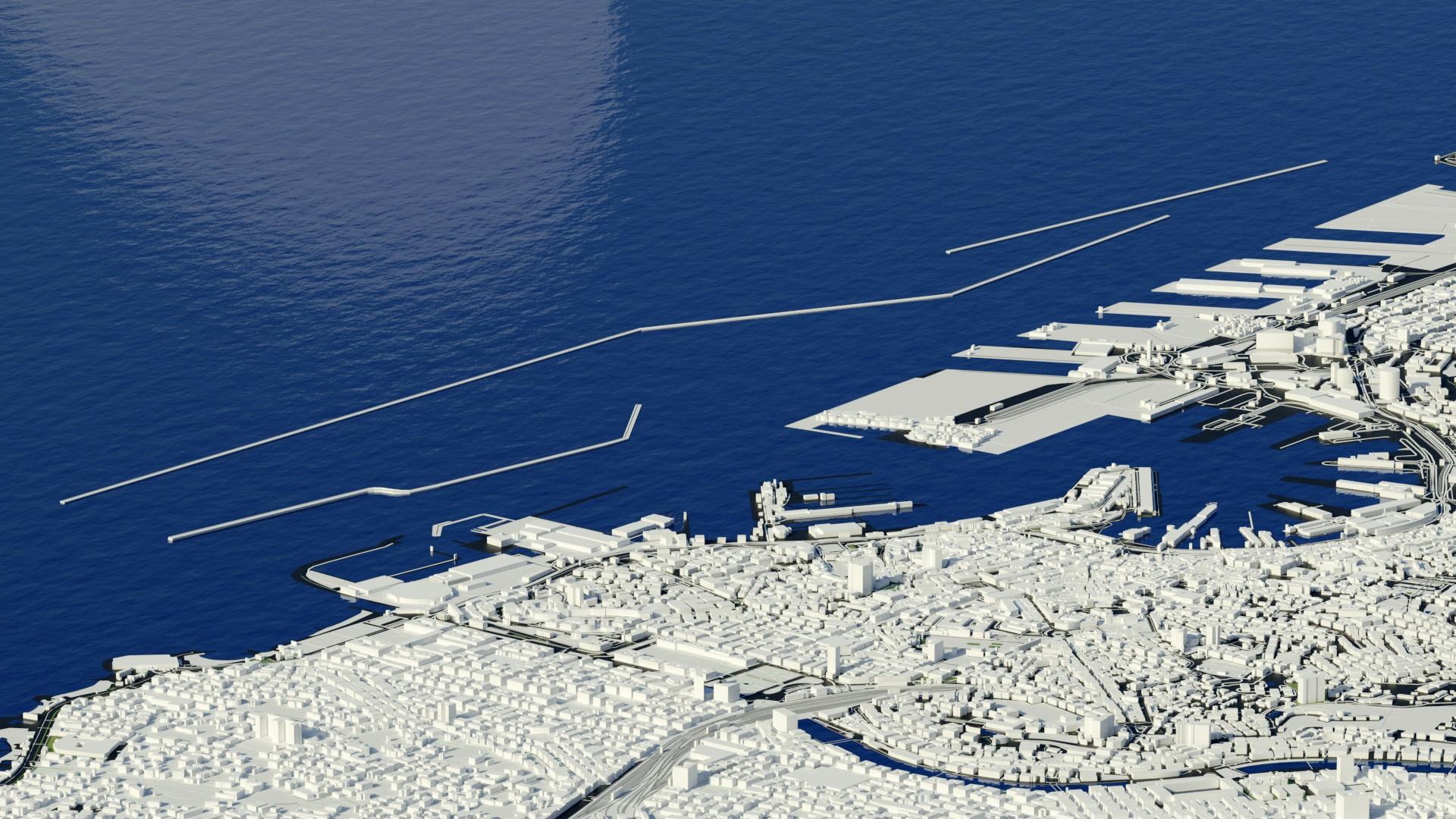
Genoa's New Breakwater is unique in the world, in terms of its complexity, size, and positive impact on the city and the Italy system, as well as being the largest-ever intervention to upgrade Italy's ports.
With the completion of this work, Genoa is poised to become an important hub for large ships and a major logistics one for trade in Europe.
The project. A look into the depths of the sea: technical innovation and timing
Genoa's New Breakwater is an impressive and one-of-a-kind engineering feat: its foundation will rest on a seabed that reaches a record depth of 50 meters, and in its final configuration will reach an overall length of 6,200 meters.
7 million tons of rock material will be used to build the basement, on which precast concrete elements composed of nearly 100 cellular caissons will be placed. The caissons will measure up to 33 meters in height (like a ten-story building), 35 meters wide and 67 meters long.
The new breakwater will allow large container ships, over 400 meters long and 60 meters wide, and "World Class" cruise ships to enter the port of Genoa.
The work will be divided into two phases: the first will end in 2026: it is the new entrance from the east, more than 300 meters wide, which will be builtallowing the maneuvering space for ships to be extended. In the second phase, to be completed in 2030, the widening of the Sampierdarena Canal to a width of 400 meters will be completed, thus increasing the operability and competitiveness of all terminals in the historic commercial basin.
Sustainable just like the sea. The circular economy construction
Environmental impacts of the breakwater's construction are minimized. The innovative construction project involves building a structure designed to protect the docks and port facilities from climate change, a true sea wall.
A solution has been envisaged to reuse almost all the material from the demolition of the old breakwater, with a circular economy way of seeing things, thus minimizing environmental impacts during construction, while concomitantly significantly reducing material transport and disposal, and thus fuel consumption.
Waste materials resulting from the processing of marble quarries will be partially reused, again with a circulatory economy view. As for the concretes used for the construction of cellular caissons, a special mixture has been developed to significantly increase their impermeability. A number of highly specialized manufacturing plants are to be used simultaneously to make the cellular caissons. Once the caissons are built and waterproofed, they are transported by sea to the project location, sunk and filled with inert recycled materials from the demolition of the old breakwater.
An advanced monitoring sensor system will then allow the infrastructure to be monitored both during construction and after its completion.
Infographic
New Genoa Breakwater inforaphic Webuild